Space technology in the Service of mankind.
- 5 November 2013 Mission Mangalyaan -
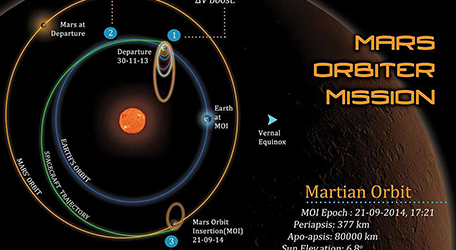
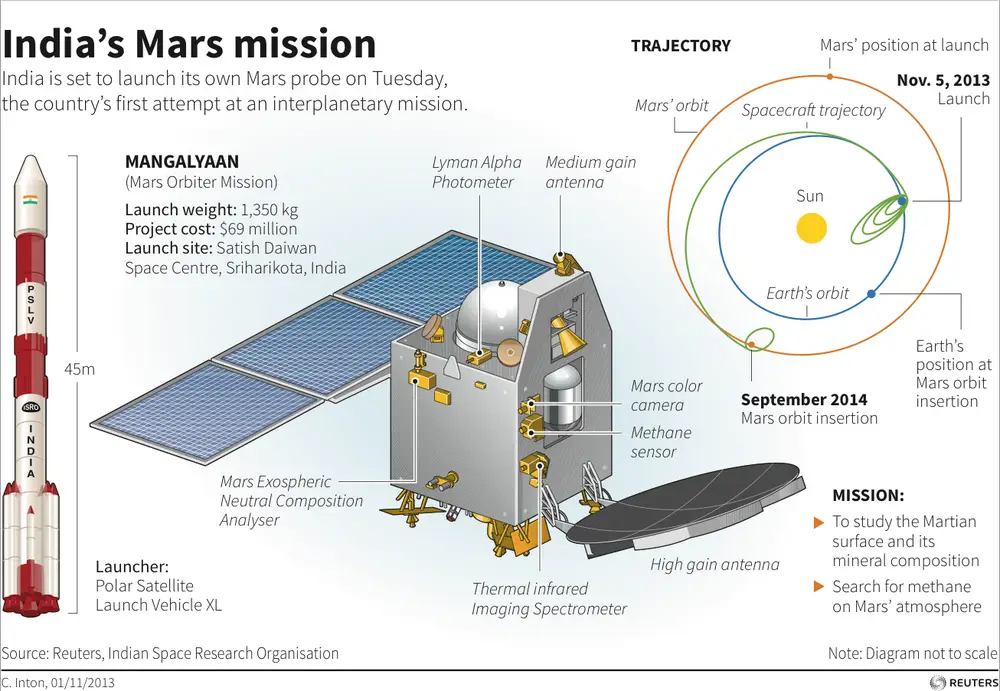
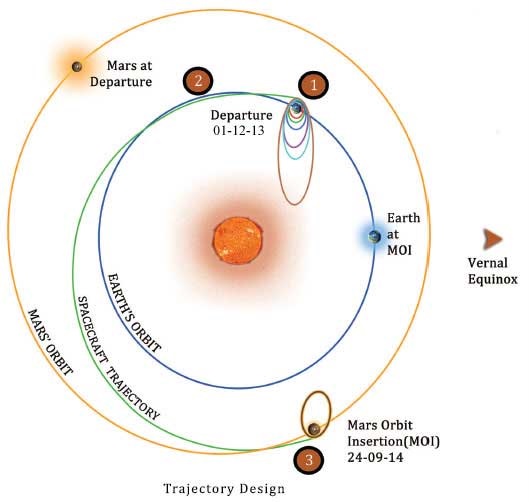
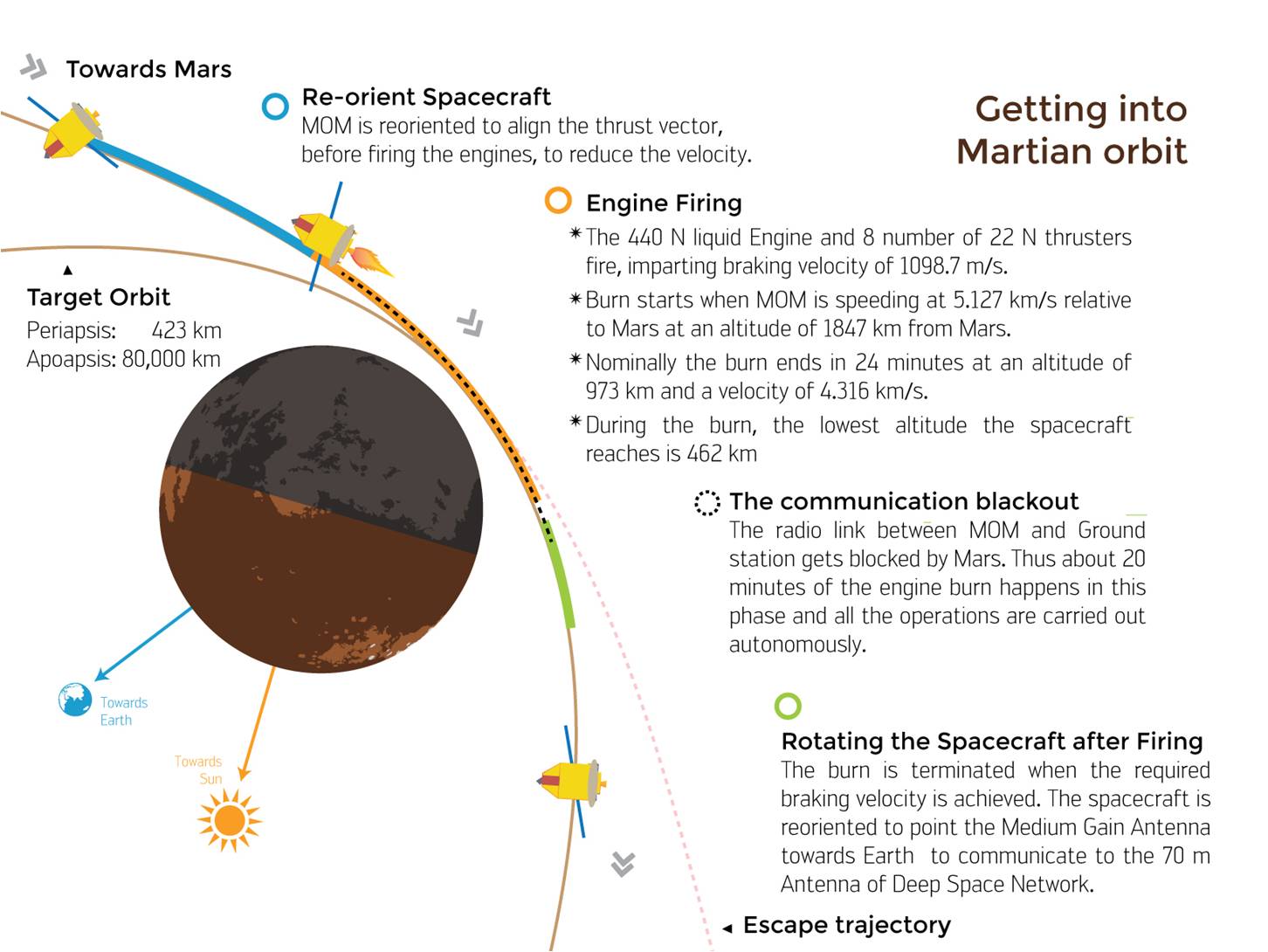
The Mars Orbiter Mission (MOM), also called Mangalyaan ("Mars-craft", from mangala, "Mars" and yāna, "craft, vehicle"), Marking India's first venture into the interplanetary space, MOM will explore and observe Mars surface features, morphology, mineralogy and the Martian atmosphere. Further, a specific search for methane in the Martian atmosphere will provide information about the possibility or the past existence of life on the planet. The enormous distances involved in interplanetary missions present a demanding challenge; developing and mastering the technologies essential for these missions will open endless possibilities for space exploration. After leaving Earth, the Orbiter will have to endure the Interplanetary space for 300 days before Mars capture. Apart from deep space communications and navigation-guidance-control capabilities, the mission will require autonomy at the spacecraft end to handle contingencies. Once India decided to go to Mars, ISRO had no time to lose as the nearest launch window was only a few months away and it could not afford to lose the chance, given the next launch would present itself after over 780 days, in 2016. Thus, mission planning, manufacturing the spacecraft and the launch vehicle and readying the support systems took place swiftly. .
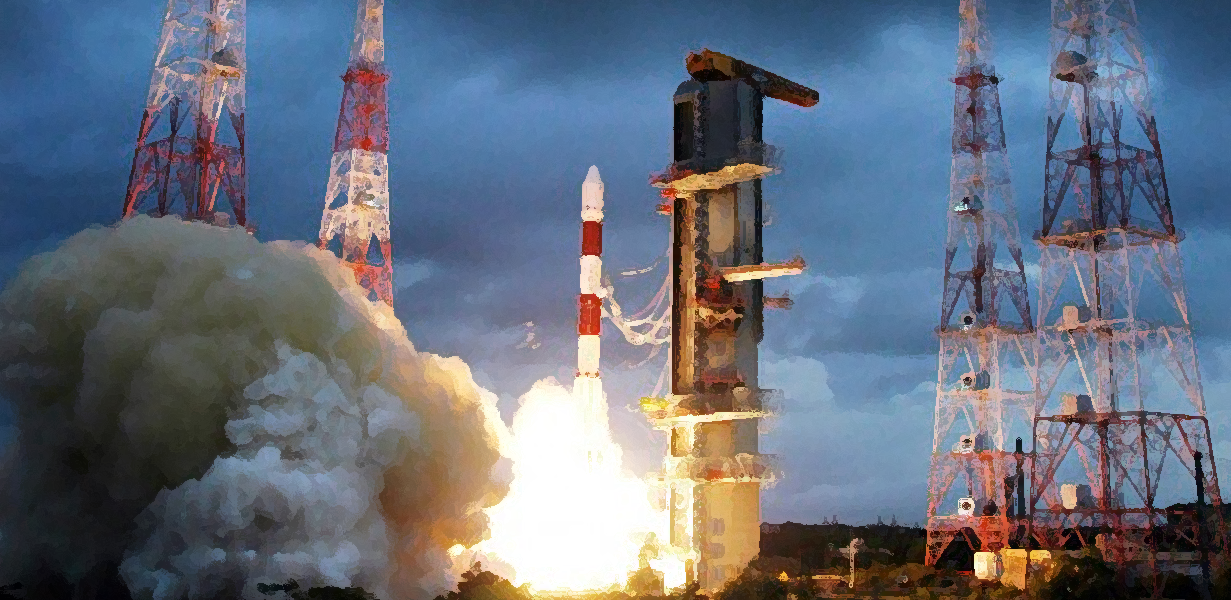
India's Mangalyaan mission is aimed at studying Martian atmosphere. Its objective is to explore Martian
surface features, mineralogy, morphology and atmosphere using indigenous scientific instruments. A
crucial objective of MOM was to develop technologies required in planning, designing, management and
operations of an interplanetary mission.
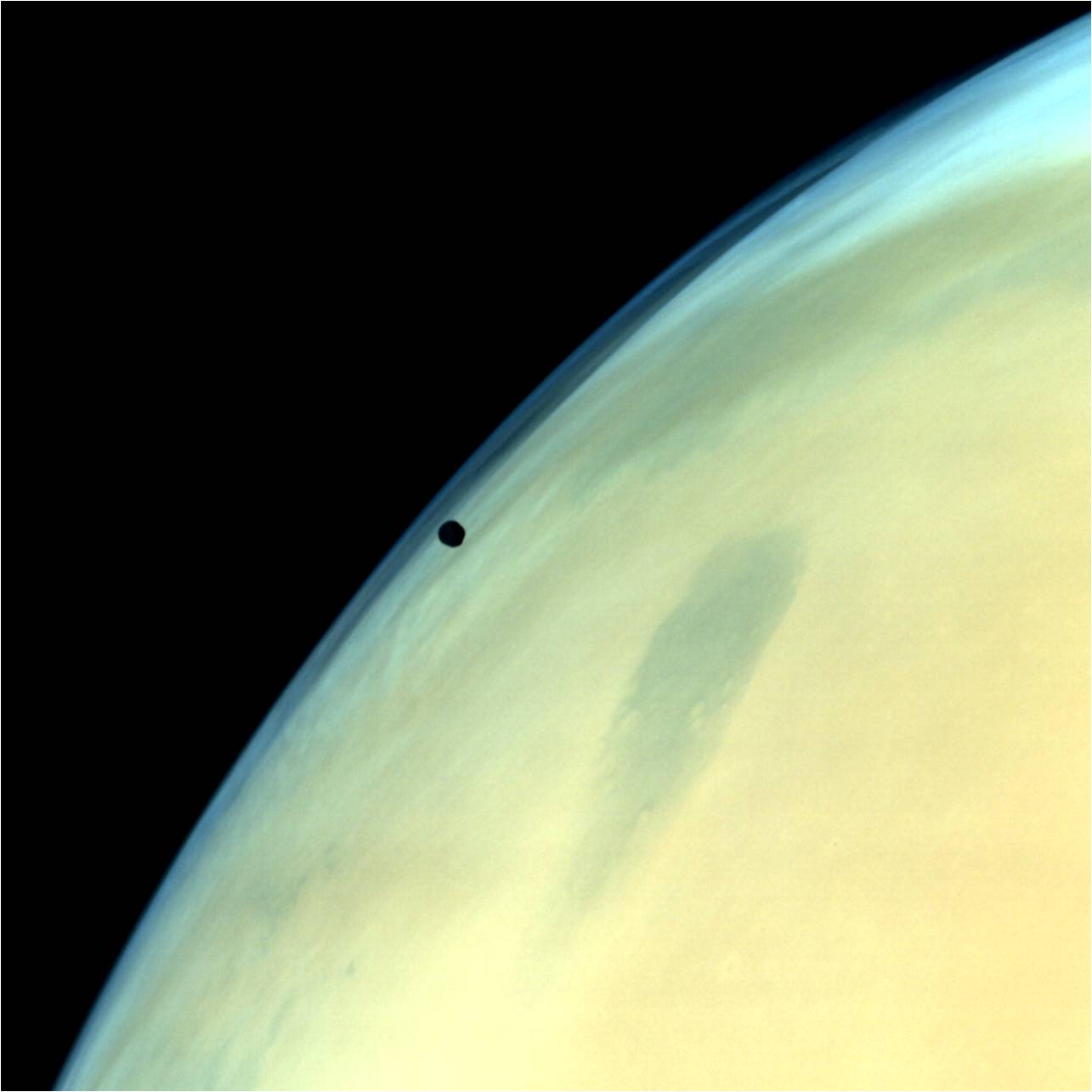
Phobos, one of the two natural satellites of Mars silhouetted against the Martian surface
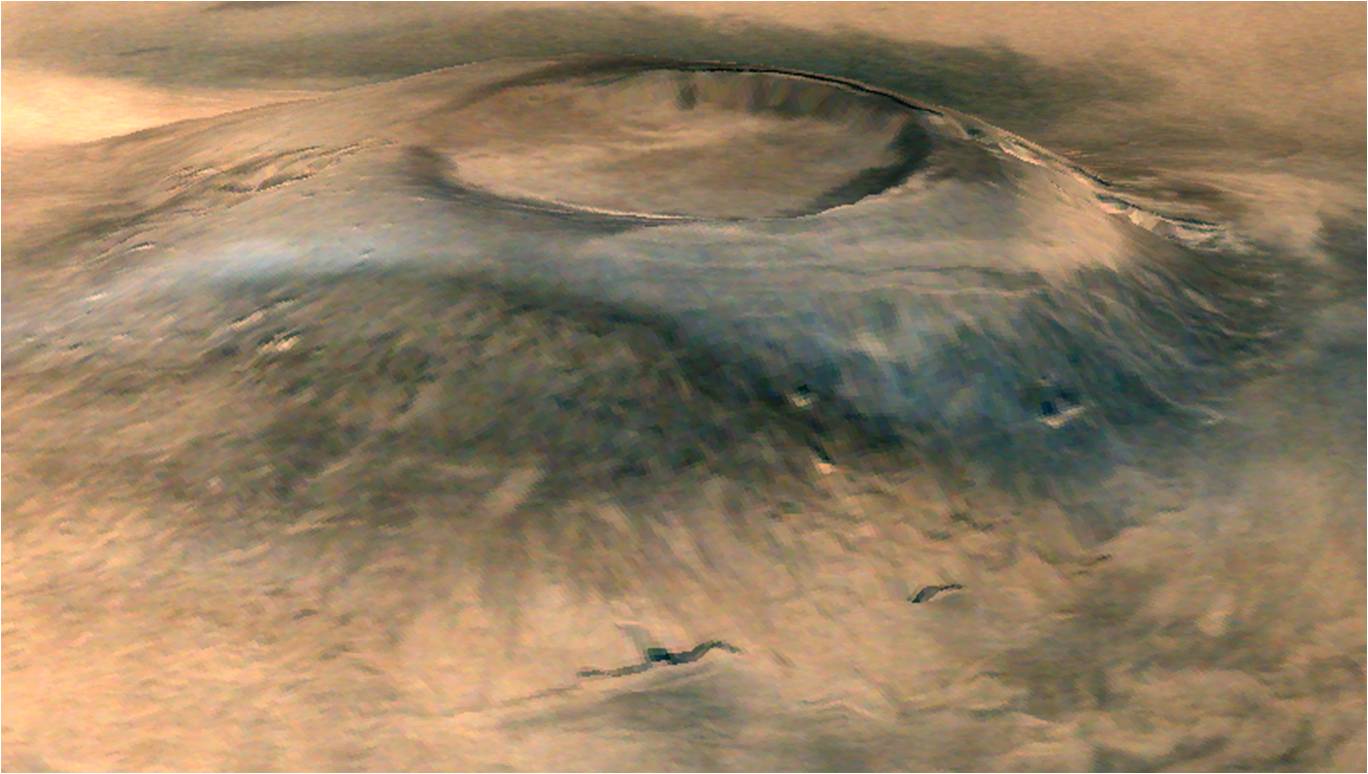
Spectacular 3D view of Arsia Mons, a huge volcano on Mars
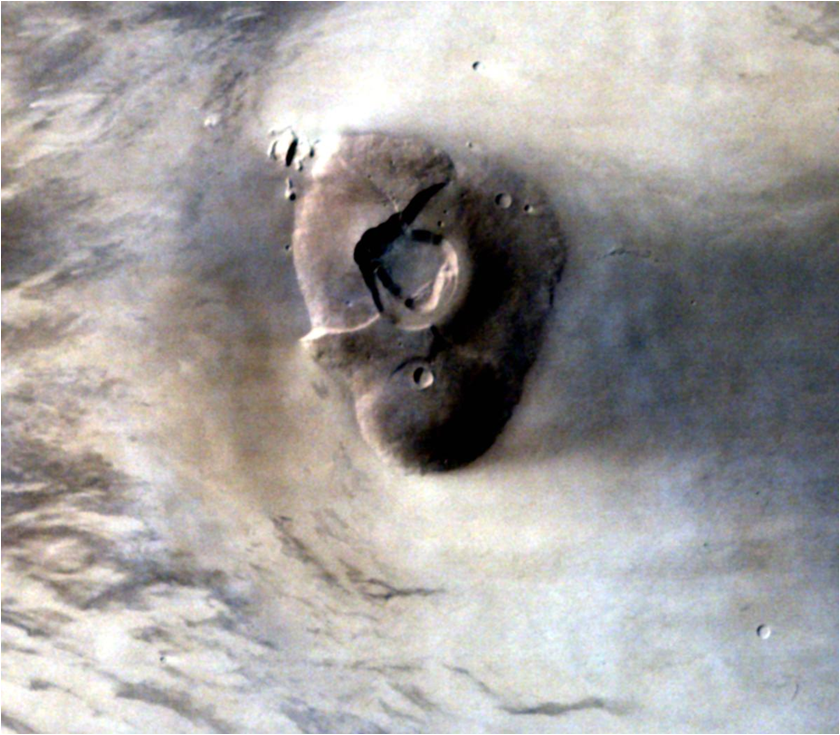
Shield Volcano Tharsis Tholus
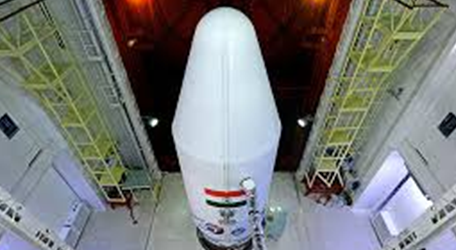
MOM was launched aboard PSLV C-25 (an XL version of the PSLV), one of the world's best and reliable
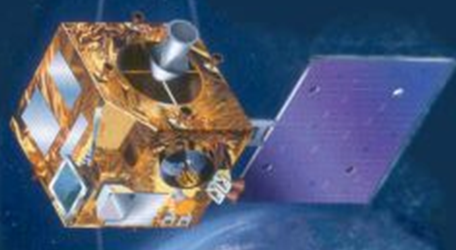
launch vehicles. The spacecraft is based on the modified I-1-K satellite bus of ISRO which proved its
reliability over the years in similar missions like Chandrayaan-1, the IRS and INSAT series of
satellites. It carried 850 kg of fuel and 5 science payloads including a Mars Color Camera (MCC) which
it has been using to study the Martian surface and atmosphere since entering the orbit successfully.
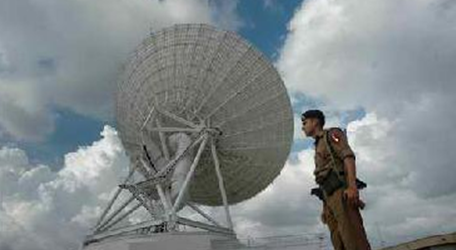
The spacecraft is tracked by the Indian Deep Space Network (IDSN), located near Bengaluru and
complemented by NASA-JPL's Deep Space Network. MOM showcased India's spacecraft building, rocket launch
systems and operation capabilities. The mission's primary objective is to develop technologies required
in planning, designing, management and operations of an interplanetary mission.
The secondary objective is to explore Martian surface features, mineralogy, morphology and atmosphere
using indigenous scientific instruments. Initially planned for a lifetime of 6 months, ISRO extended the
mission to another 2-3 years in April 2015 because of the adequate quantity of fuel still left in the
spacecraft. Till December 2015, the MOM had completed over 8000 orbits of Mars.
Isro-Mangalyaan
Isro-Mangalyaan
Isro-Mangalyaan
Bangalore: As India closes in on its destination Mars with the Mangalyaan satellite, many across the
world have been dumbstruck at the low cost of India's Mars Orbiter mission. Here are the details on how
India achieved this seemingly impossible task, becoming the envy of the world.(India's Mars Orbiter,
Mangalyaan Clears Crucial Test)
This golden satellite, approximately the size of a Nano car, and the entire Mars Orbiter mission have
been made ready at a record cost of ₹ 450 crore or nearly $67 million dollars. (Watch the Video)
Put together by the Indian Space Research Organisation or ISRO in a record time of 15 months, it has
been on a 300-day marathon, covering some 670 million kilometres to reach its destination Mars. This is
undoubtedly the lowest-cost inter-planetary mission ever to be undertaken in the world. (In Asian Space
Race, India Inches Closer to Beating China to Mars)
On his recent visit to India's rocket port in June, Prime Minister Narendra Modi had remarked, "The
Hollywood movie Gravity cost more than our Mars mission - this is a great achievement." (Watch: Mission
Mars: Countdown Continues, Will India Make History?)
NASA's latest mission to Mars called MAVEN, which incidentally reached the Red Planet on Monday ahead of
the Indian satellite, costs ten times more. (NASA's MAVEN Enters Mars Orbit).
"This has been a cheap mission. But we have not compromised; we have done it in two years and ground
testing has helped," said K Radhakrishnan, Chairman of ISRO.
The darling of Martian dreamers -- American rover Curiosity which has been sitting on the surface of the
Red Planet -- cost over a whopping 2 billion dollars. India's technological capabilities
and frugal bills have help cut costs. (PM Modi to Witness Mars Orbiter Insertion at ISRO Facility)
Mangalyaan is the cheapest inter-planetary mission ever to be undertaken anywhere in the world. It has
cost ₹ 450 crores or just about ₹ 4 per person in India. India is paving the
way for faster, cheaper and possibly durable inter-planetary missions.
On September 28, 2014, MOM controllers published the spacecraft's first global view of Mars. The image was captured by the Mars Colour Camera (MCC). Over the years, MCC has captured over 980 images that were released to the public.
On September 24, 2018, MOM completed four years in its orbit around Mars, although the designed mission life was only six months. ISRO now plans to develop and launch a follow-up mission called Mars Orbiter Mission 2 (MOM-2 or Mangalyaan-2) in 2024.
Bollywood actor Akshay Kumar starrer Mission Mangal is set to release on August 15, 2019. The movie is based on India's Mangalyaan.
The Mars Orbiter Mission carries five payloads to accomplish its scientific objectives. Three electro-optical payloads operating in the visible and thermal infra-red spectral ranges and a photometer to sense the Mars atmosphere & surface. One additional backup payload is planned in case of non-availability of the identified payloads.
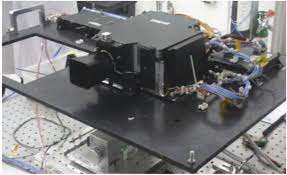
MSM is designed to measure Methane (CH4) in the Martian atmosphere with PPB accuracy and map its sources. Data is acquired only over illuminated scene as the sensor measures reflected solar radiation. Methane concentration in the Martian atmosphere undergoes spatial and temporal variations. Hence global data is collected during every orbit.
Methane Sensor for Mars (MSM) is a differential radiometer based on Fabry–Perot Etalon filters to measure columnar methane (CH4) in the Martian atmosphere at several parts per billion (ppb) levels. This differential signal gives a measure of columnar amount of CH4. The possible finding of methane in Martian atmosphere will provide clues about the presence of life on Mars. A brief specification of the MSM instrument is provided in Annexure 3.
Methane Sensor for Mars (MSM)
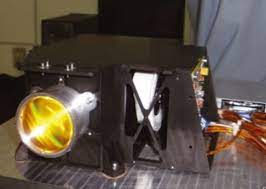
Methane Sensor for Mars (MSM)
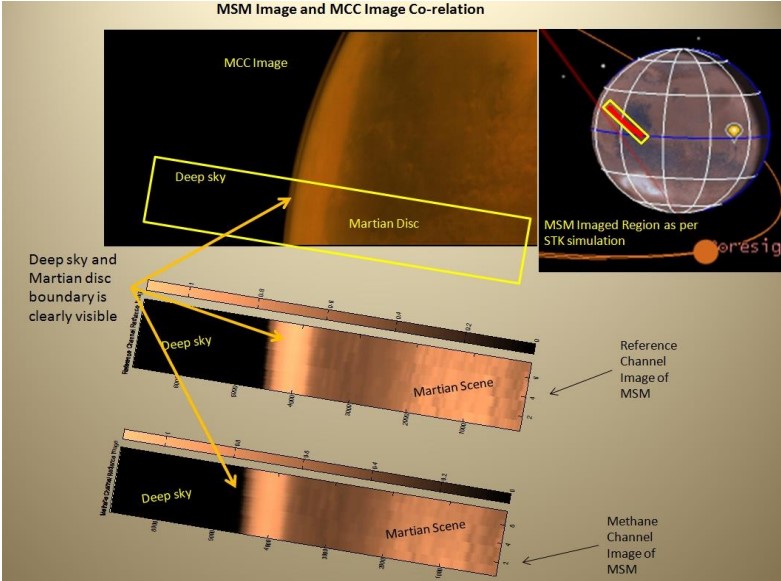
Methane Sensor for Mars (MSM)
This tri-color Mars Color camera gives images & information about the surface features and composition of Martian surface. They are useful to monitor the dynamic events and weather of Mars. MCC will also be used for probing the two satellites of Mars – Phobos & Deimos. It also provides the context information for other science payloads.
Mars Colour Camera (MCC) is an electro-optical sensor imaging surface of Mars in three colours, varying spatial resolution between ~20 m to ~4 km in 16 different exposure modes, depending on its position in orbital plane and illumination conditions. The MCC payload provides data in true colors of Mars covering Red, Green and Blue as Bayer pattern. Important science objectives of MCC include studying morphology of landforms, wind streaks, dynamic processes such as dust storms in different seasons. Technical specifications of MCC are provided in Annexure-1.
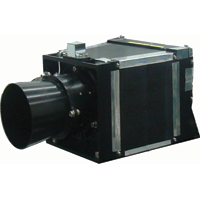
Mars Color Camera (MCC)
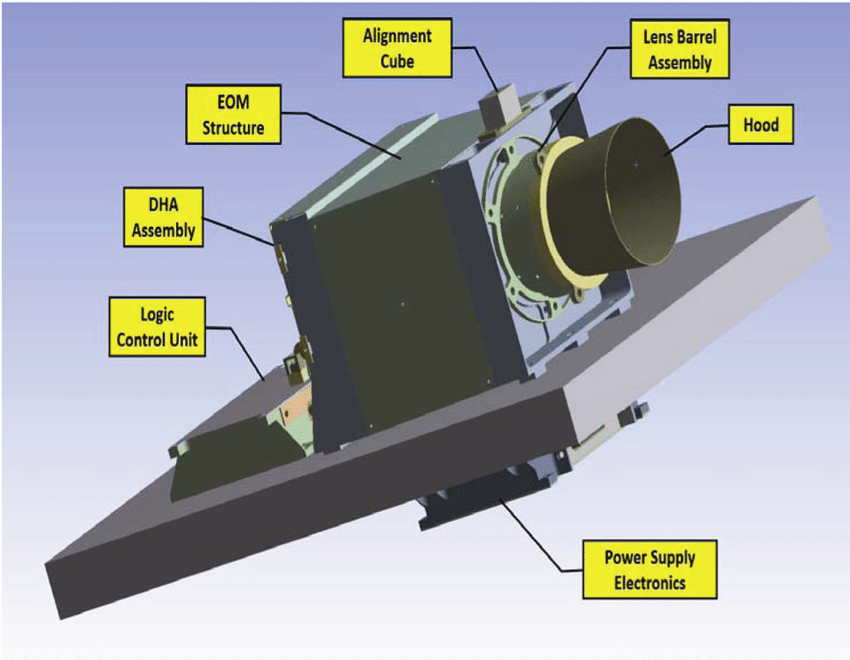
Mars Color Camera (MCC)
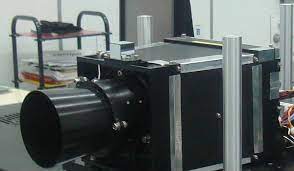
Mars Color Camera (MCC)
Lyman Alpha Photometer (LAP) is an absorption cell photometer. It measures the relative abundance of deuterium and hydrogen from Lyman-alpha emission in the Martian upper atmosphere (typically Exosphere and exobase). Measurement of D/H (Deuterium to Hydrogen abundance Ratio) allows us to understand especially the loss process of water from the planet.
Lyman Alpha Photometer (LAP) is essentially a compact far-ultraviolet photometer capable of providing deuterium to hydrogen (D/H) abundance ratio of Martian exosphere from spacecraft observations. Comparison of the present and initial D/H ratio, estimated from observations of the D/H ratio in comets and asteroids, which are believed to be sources of Martian water should allow us to calculate the amount of hydrogen and, therefore, the water that has been lost over planet’s lifetime. Primary scientific objective of the LAP instrument is to determine D/H isotope ratio of Martian upper atmosphere from the ratio of the measured Lyman-alpha intensities. The observations would enable us to i) generate spatial and temporal profiles of hydrogen and deuterium Lyman-alpha intensities, ii) study of deuterium-enrichment in the upper atmosphere and iii) estimate of the water escape/loss rate. Brief specifications of the LAP instrument are provided in Annexure 4.
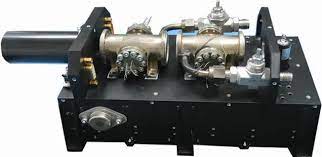
Lyman Alpha Photometer (LAP)
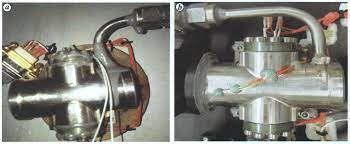
Lyman Alpha Photometer (LAP)
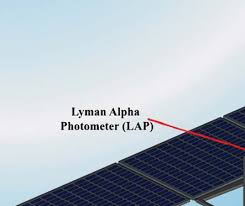
Lyman Alpha Photometer (LAP)
MENCA is a quadruple mass spectrometer capable of analysing the neutral composition in the range of 1 to 300 amu with unit mass resolution. The heritage of this payload is from Chandra’s Altitudinal Composition Explorer (CHANCE) payload aboard the Moon Impact Probe (MIP) in Chandrayan-1 mission.
The MENCA instrument is meant for in situ study of the composition of the Martian neutral exosphere. Taking advantage of the highly elliptical orbit of the MOM spacecraft, MENCA data can be used to derive information on the radial distribution and composition of the Martian neutral exosphere. Brief specifications of the MENCA instrument are provided in Annexure 5.
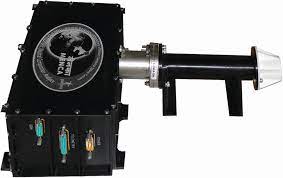
Mars Exospheric Neutral Composition Analyser (MENCA)
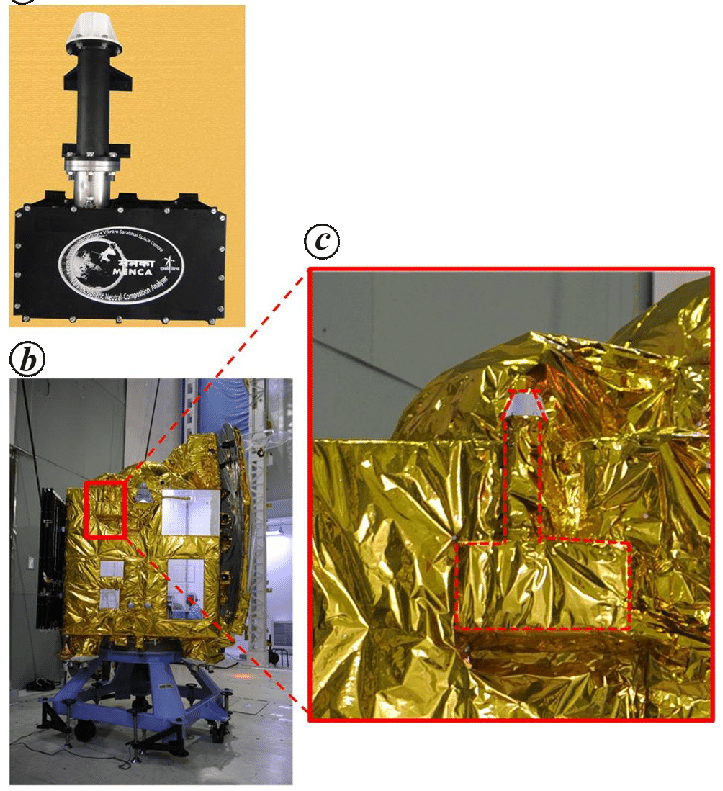
Mars Exospheric Neutral Composition Analyser (MENCA)
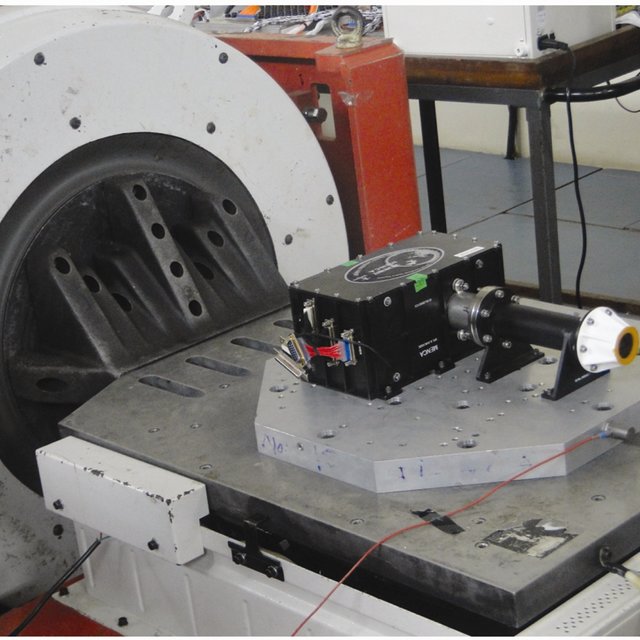
Mars Exospheric Neutral Composition Analyser (MENCA)
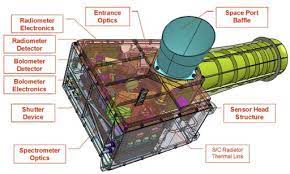
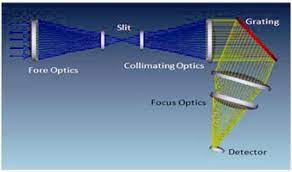
TIS measure the thermal emission and can be operated during both day and night. Temperature and emissivity are the two basic physical parameters estimated from thermal emission measurement. Many minerals and soil types have characteristic spectra in TIR region. TIS can map surface composition and mineralogy of Mars.
Thermal Infrared Imaging Spectrometer (TIS) instrument is aimed to observe thermal emission from Mars surface to detect its temperature and hot spot regions or hydrothermal vents on Martian surface. The TIS is designed to observe emitted infrared radiation from Martian environment in 7–13 µm region of electromagnetic spectrum using a micro bolometer device. Brief specifications of the TIS are provided in Annexure 2.
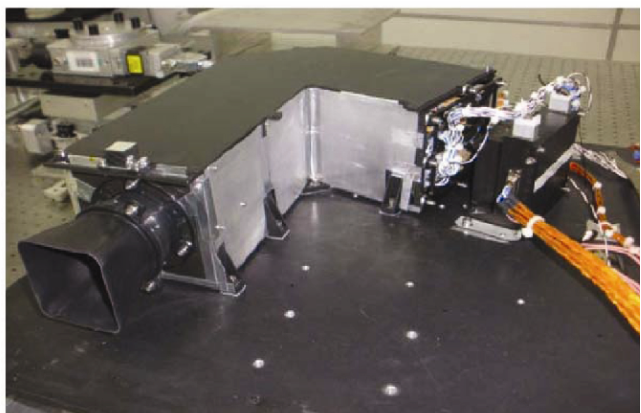
Thermal Infrared Imaging Spectrometer (TIS)
Thermal Infrared Imaging Spectrometer (TIS)
Thermal Infrared Imaging Spectrometer (TIS)