
Space technology in the Service of mankind.
- Pictures from Mars Colour Camera -
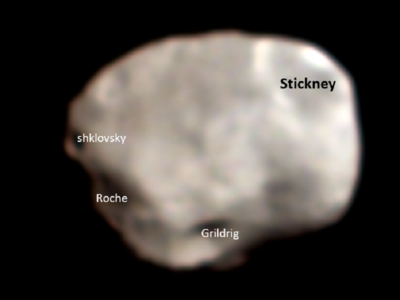
NEW DELHI: In another spatial breakthrough, the Mars colour camera onboard the Mars Orbiter Mission (MOM) of Indian Space Research Organisation (Isro) has captured the image of Phobos, the closest and biggest moon of the red planet. The space agency on Friday night released the image that was taken on July 1 when the orbiter was about 7,200 km from Mars and at 4,200 km from Phobos. The photo generated is a composite image generated from six camera frames and has been colour-corrected...
Source:THE TIMES OF INDIA
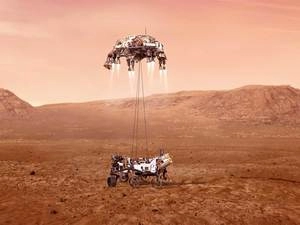
NASA's Perseverance rover landed on Mars in the early hours of Friday to look for signs of past life, ISRO chief K Sivan said India's next mission to the Red Planet is likely to be an orbiter. He, however, did not provide an exact time frame for the mission -- Mangalyaan-2. The second mission to Mars will be undertaken only after the launch of Chandrayaan-3, he said The third mission to the Moon or Chandrayaan-3, under which ISRO aims to land a rover on the satellite, has been delayed due to the coronavirus-induced pandemic and is now likely to lift off in 2022...
Source:THE ECONOMIC TIMES
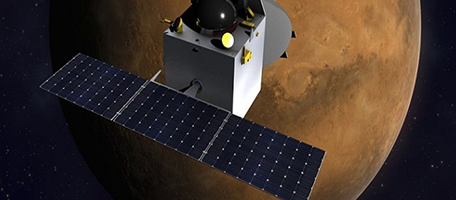
xactly, six years ago, on this day, India's tryst with the 'Red Planet' began with the launch of the Mars Orbiter Mission (MOM). Six years, later in 2019, the probe is still orbiting and sending useful pictures. Also known as the Mangalyaan mission, the Rs 450 crore project was a daring effort by the Indian Space Research Organisation (ISRO), to attempt an inter-planetary journey. The PSLV rocket, placed the probe on its path on November 5, 2013 and after a long and ardous trip it reached the destination in September 2014 Planned for just six months, the MOM, has beaten everybody's expectations and turned in a 'Bahubali' type performance...
Source:THE ECONOMIC TIMES

ISRO's Mangalyaan mission completed five years on Tuesday. In the last five years, the Mars Orbiter Mission or MOM, India's first interplanetary endeavour, helped India's space agency prepare a Martian Atlas based on the images provided by the orbiter. In the last five years, the Mars Orbiter Mission or MOM, India's first interplanetary endeavour, helped India's space agency prepare a Martian Atlas based on the images provided by the orbiter, Mr Sivan told news agency Press Trust of India...
Source:NDTV
India's space programme has succeeded at the first attempt where others have failed - by sending an operational mission to Mars. The Mangalyaan satellite was confirmed to be in orbit shortly after 0800, Indian time. It is, without doubt, a considerable achievement. This is a mission that has been budgeted at 4.5bn rupees ($74m), which, by Western standards, is staggeringly cheap. The American Maven orbiter that arrived at the Red Planet on Monday is costing almost 10 times as much...
Source:BBC
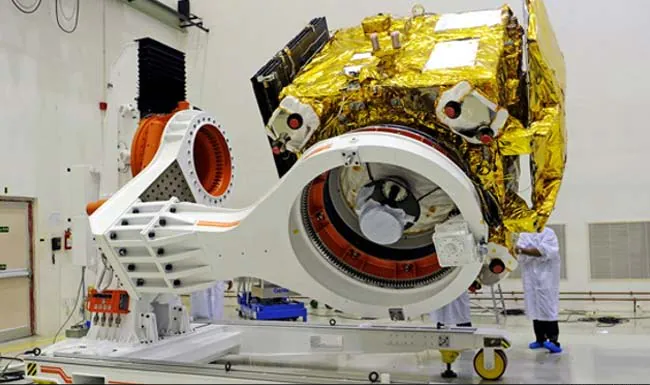
On September 24, 2014, India became the first country in the world to enter the Martian orbit in its first attempt. The mission dubbed as ‘Mangalyaan‘(Mars Orbiter Mission) was the first such interplanetary mission undertaken by an Asian country. Although launched on November 5, 2013, from Satish Dhawan Space Centre in Sriharikota (Andhra Pradesh), it took 296 days for the probe to exit the Earth’s orbit....
Source:OPINDIA